There is a particular kind of courage that doesn’t announce itself. It doesn’t arrive with fanfare or confidence. Sometimes, it looks like a young woman walking through a hospital gate on trembling legs, carrying nothing but the weight of everything she has survived.
That was Samiro last December.
At just 20 years old, Samiro Osman had already lived through more hardship than most people face in a lifetime. Her story began far from Mogadishu, in a quiet village near the Somalia–Ethiopia border, before life carried her to Abudwak, then to the capital, and through a series of losses that would have broken many people entirely.
A Young Mother, Alone with Her Fear
Her first pregnancy came wrapped in equal parts hope and fear.
“As a young, first-time mother, I was too afraid to give birth in a hospital,” she recalls.
She labored at home for two days before an emergency cesarean section became unavoidable. The private facility that saved her life also left her family struggling financially, adding yet another burden to a life already full of hardship.
Then came Mogadishu, and with it, challenges she hadn’t prepared for. A painful separation left Samiro displaced, alone in an unfamiliar city, and eventually without contact with her first child. The loneliness of that reality is hard to put into words, but Samiro finds them anyway.
“I felt completely empty,” she says. “My only child was gone, and I felt I had no one to turn to.”
A Neighbor’s Kindness
When Samiro discovered she was pregnant again, the emotions were complicated, joy tangled tightly with worry. Where would she go? Who would be there? The memory of her first birth, the instability of her present life, and the vulnerability of facing motherhood alone all pressed down on her at once.
It was a neighbor, perhaps unremarkable in her own eyes — who changed the course of Samiro’s story. She pointed her toward the Garasbaley Health Centre, a facility known for treating patients not just as medical cases, but as human beings deserving of dignity.
That small act of kindness made all the difference.
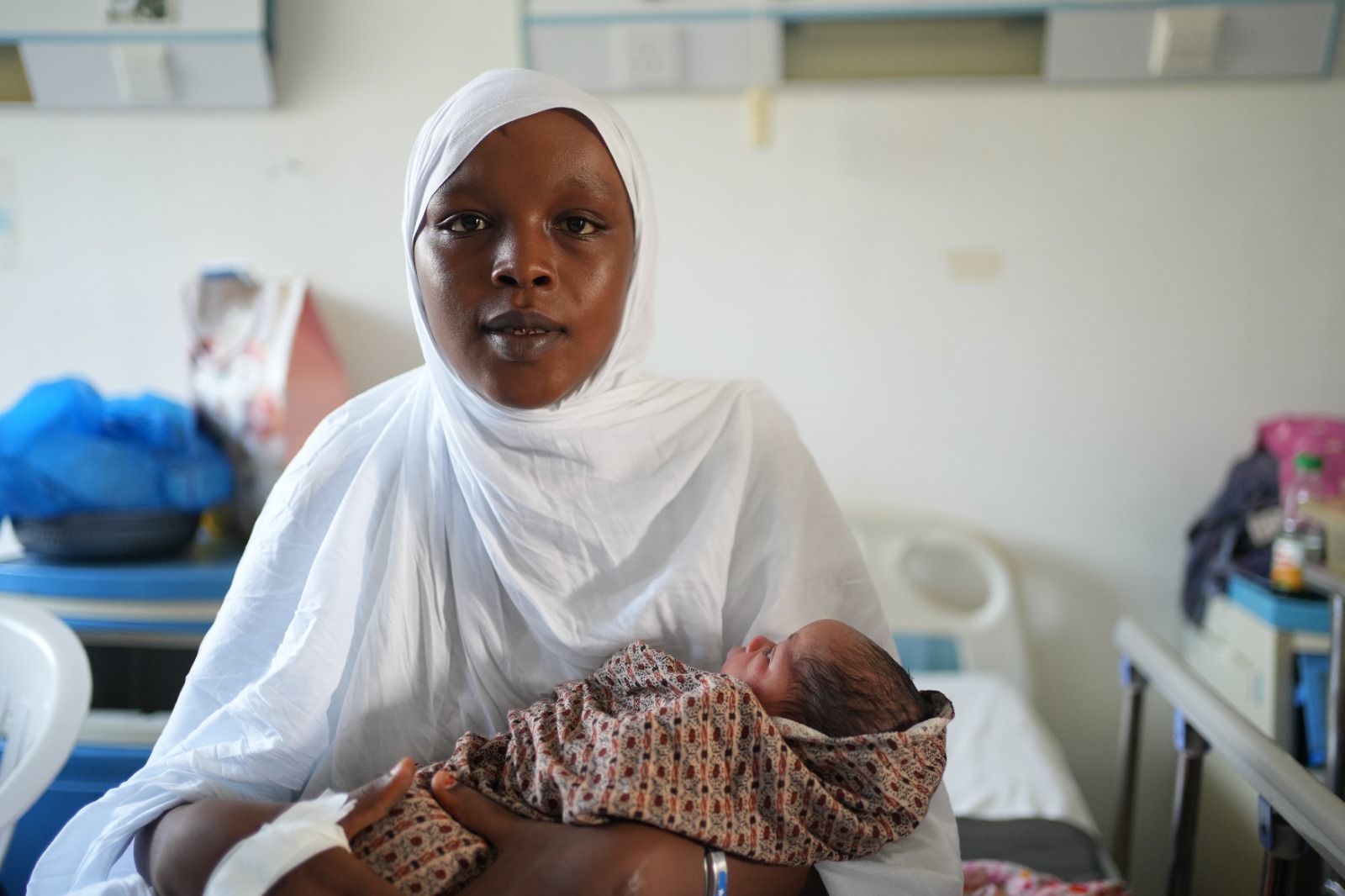
When Samiro arrived at the centre in labor, the maternal health team didn’t just see a patient. They saw a woman who was exhausted and in need of more than clinical care. Recognizing her weakened condition and underlying health concerns, they acted quickly, referring her to the SOS Mother and Child Hospital where a dedicated medical team was waiting.
Doctors performed another emergency cesarean section. And then, in the middle of all that fear and uncertainty, something beautiful happened.
Samiro’s son was born healthy, weighing 3.45 kilograms, and completely unaware of the storm his mother had weathered to bring him into the world.
“I had no family by my side,” Samiro says, her voice carrying both sorrow and gratitude. “But the team at SOS Children’s Villages was there to care for me and save my life. I was treated with such respect.”

What happened next says everything about what genuine humanitarian care looks like. The doctors and nurses at SOS didn’t close the door once the surgery was done. They understood that Samiro’s wounds weren’t only physical, that a woman who had lost a child, a home, and her sense of safety needed far more than stitches and a discharge form.
They gave her food. They gave her clothing. They connected her with mental health support to help her work through the layers of trauma she carried. They gave her, in her own words, everything unconditionally.
“I had nothing, no clothes, no food, no home,” she explains. “But you gave me all these unconditionally.”
There is something deeply moving about that word: unconditionally. It speaks to the kind of care that doesn’t ask what you deserve or what you can give in return. It simply shows up.
Today, Samiro smiles when she talks about her son. It’s a careful smile — the kind that belongs to someone still healing, still finding solid ground — but it’s real. She continues to receive counseling, working through her trauma one session at a time, with her eyes fixed on the simple, everyday miracle of watching her boy grow.
“I am hopeful,” she says. “I pray to see my child walk and grow.”
In those words lives the quiet power of what integrated care can do. Not just keeping a mother alive, but giving her a reason to look forward.
A Story of Resilience
Samiro’s journey is not unique in Somalia and that is precisely the point. Across the country, mothers are navigating drought, displacement, conflict, and grief, often with little safety net to catch them. The difference between a story like Samiro’s ending in tragedy or in cautious hope often comes down to whether the right systems are in place.
The Caafimaad Plus Consortium, supported by European Civil Protection and Humanitarian Aid (ECHO), has been working to ensure those systems exist — not just as hospitals and clinics, but as genuine communities of care that see the full humanity of every person who walks through their doors.
Because what Samiro found in Mogadishu wasn’t just a hospital. She found people who looked at her and refused to look away. And sometimes, that is the most powerful medicine of all.