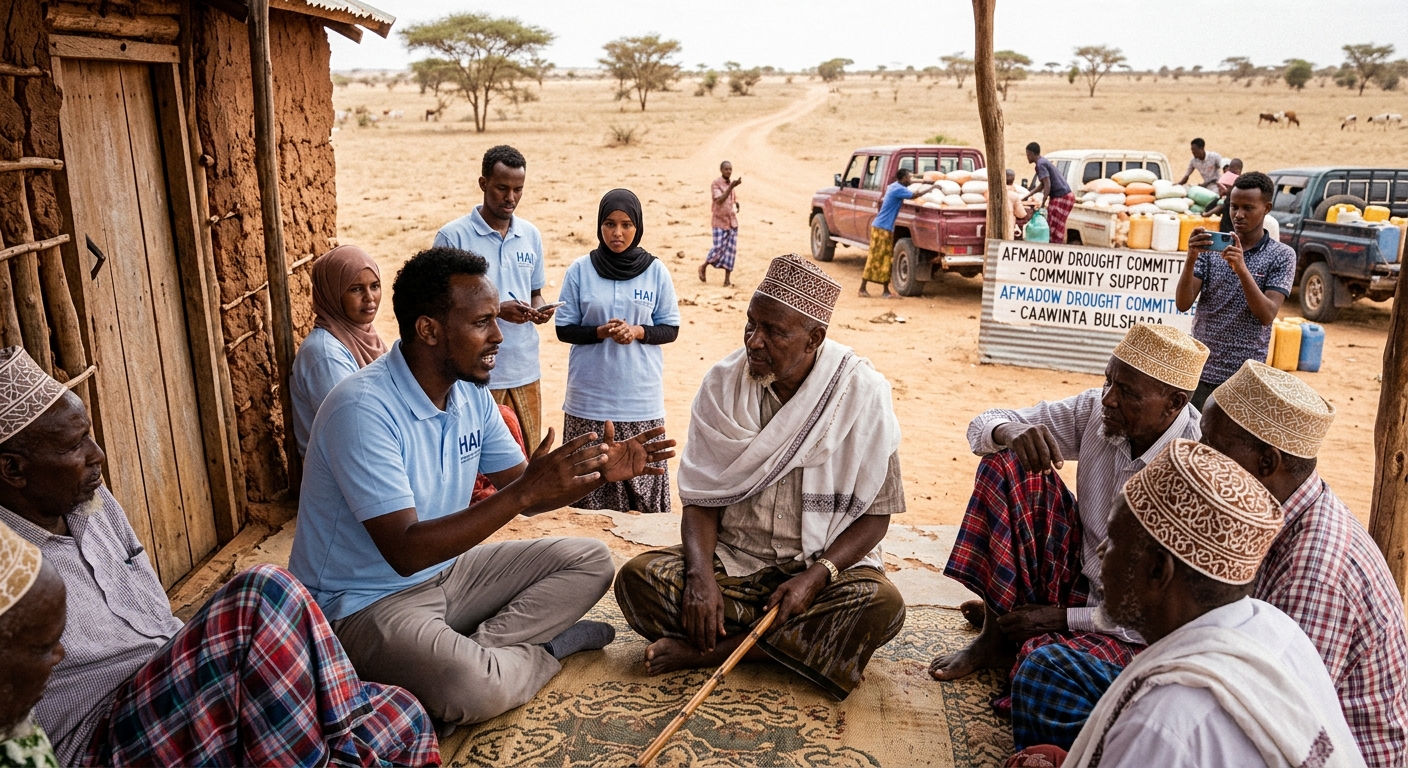
Humanitarian Access Initiative (HAI) community facilitator with Juba Foundation, Ahmed, tells of how communities in Afmadow district helped nearly 800 families during the 2026 drought:
In early February, we were due to meet with five people from Arba Qassaw, a place around 30km from Afmadow. We regularly meet this group, but this time, one of the elders told us that everyone was busy dealing with the drought so they didn’t have time. My co-facilitator, Amino, and I discussed and we decided rather than go back and do nothing we would go and chat to people around Arba Qassaw while they went about their business. In Afmadow town, we met Mr Abdikarim, chairman of the drought committee, which religious leaders and elders had established in January. He told us they were trying to collect funds and food rations from residents, the diaspora, business owners, local politicians and the administration to support people affected by drought – pastoralists whose livestock needed water and pasture and poor families needing food and basic supplies. But there were many people not yet contributing to the collection. As facilitators, we decided to try and raise awareness among the people and encourage them to take initiative and help one another.
We were so glad we did. We went into the mosques at noon. In one in Afmadow, there were several elders and religious scholars resting there. I said to them, ‘people are dying and you are sleeping here! Let’s go and help!’ At first they said, ‘you are from an organisation and those organisations have confused us. We will stay sleeping’. I replied, ‘No. I am your son from this community. We want to work together to help our people. Come on. Let’s go and help them ourselves – we can do a better job than those organisations’. At this they responded, ‘Ah – we thought you are coming from an organisation. OK let’s go. What can we do?’. They went and successfully gained widespread support and contributions to the drought effort.
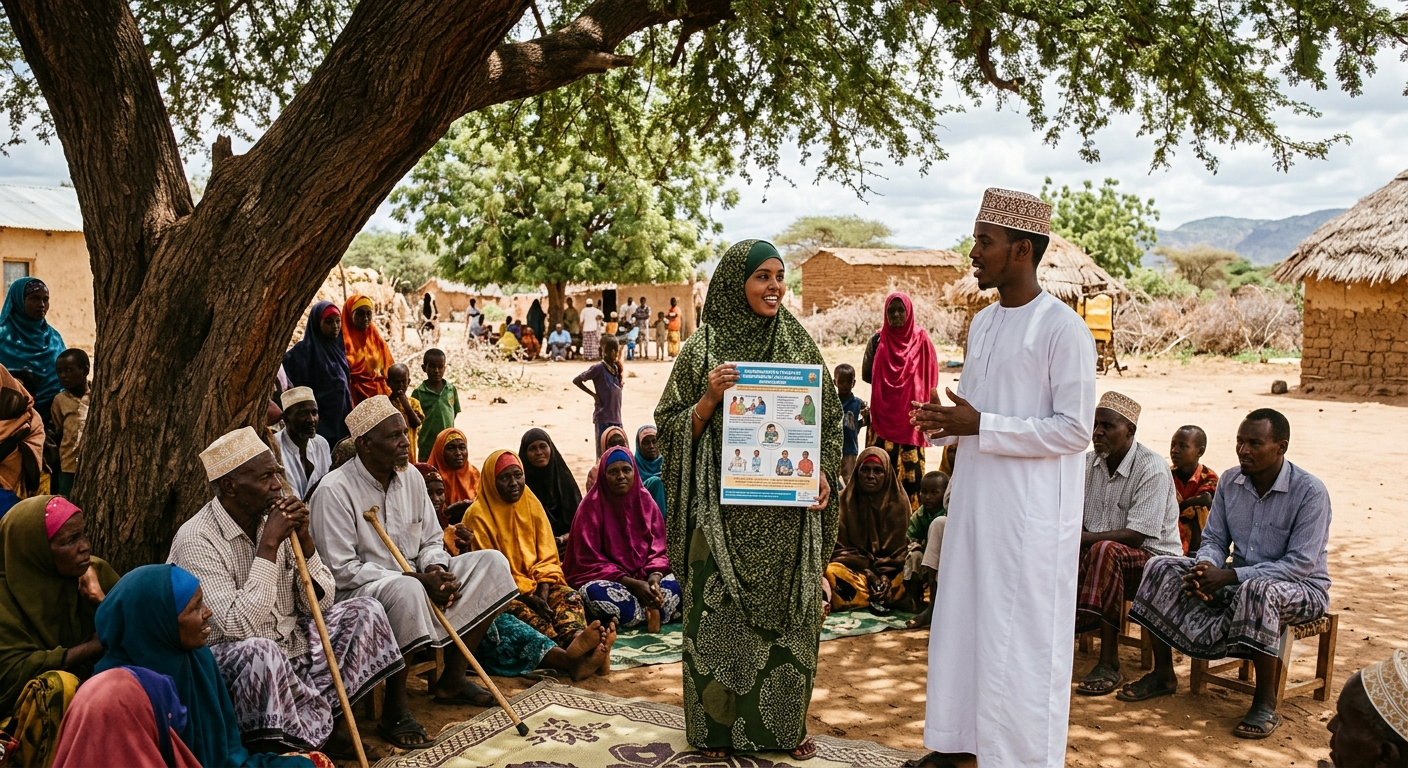
We went to other places across Afmadow district, sometimes travelling upto 60km, and spoke to many people. We made an effort especially to meet with young people and local social media influencers, some of whom spread the word on TikTok, others with their neighbours and friends. Afterwards, many people started to contribute. The elders made sub-groups of people – one group to handle water trucking, one for burying dead animals, one for food distribution. As facilitators and members of that community, we did our bit.
That community raised nearly USD38,000 and supported 796 households across Afmadow district, providing food and water in a coordinated way to communities up to 60km away. This included the people of Booji, over 50km from Afmadow, where the water catchment had dried up. They had started to leave Booji, but they couldn’t make it to town – instead they got help by climbing trees to find mobile reception. The drought committee was able to transport food and water to them.
HAI facilitators are from the community, as locals we were well able to fuel existing efforts.
While these efforts were going on, we chatted to many people about their response to drought. A farmer explained how she has a lot of maize – enough to feed the town, but when food assistance is delivered it wipes the market from her. Others spoke about how they wish humanitarian agencies would support micro-enterprises rather than giving cash.
The message is clear – when a community decides to do something for itself, it works.