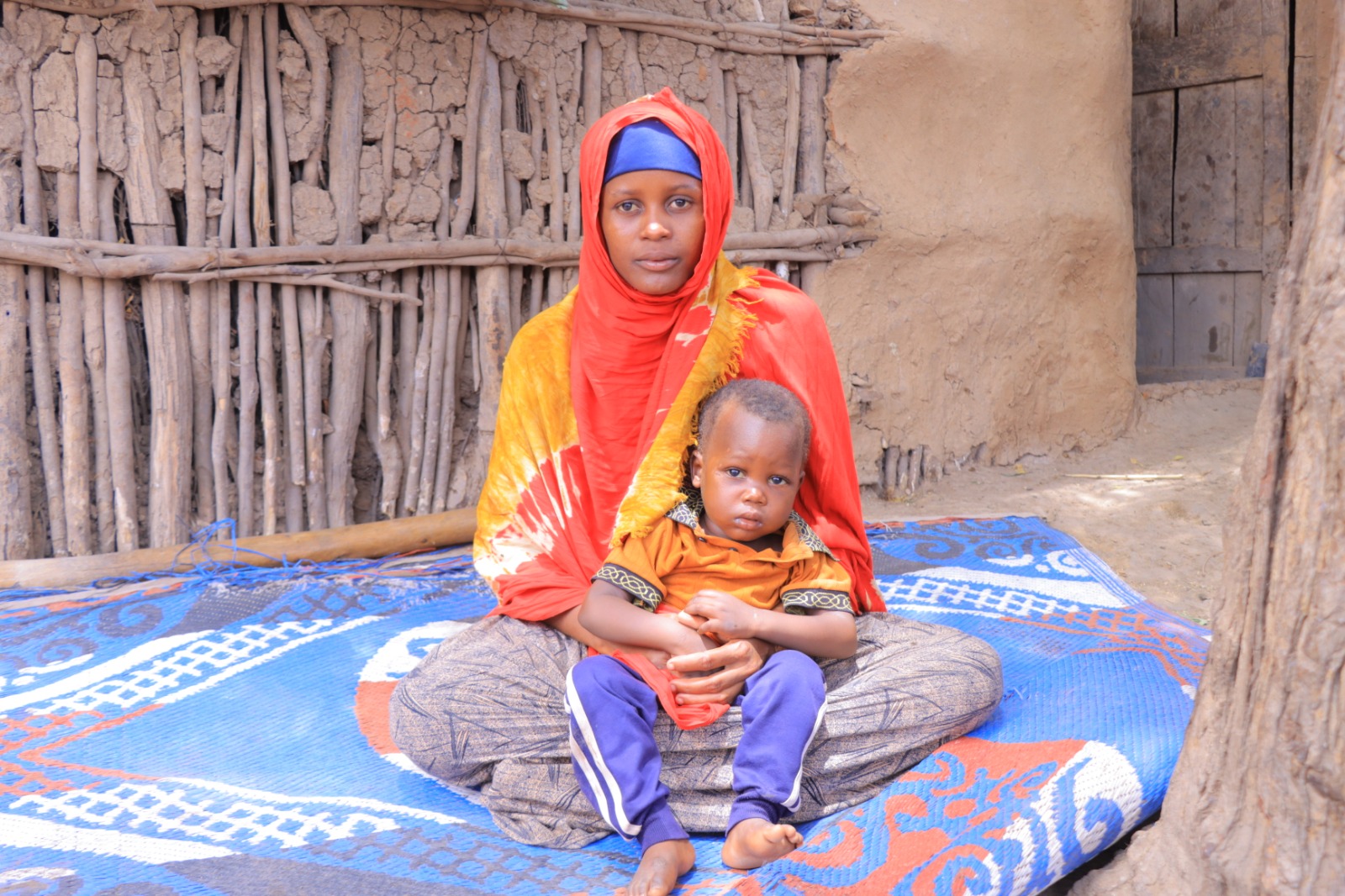
A mother of six paid her own fare to learn tie-and-dye at the Galkayo Women and Girls Safe Space. Now she teaches what she learned to girls in her community.
Three days a week, Sacdiyo Hassan Hussein and two of her neighbours squeezed into a rented bajaj, the three-wheeled taxi, and crossed Galkayo together. Their destination was the Women and Girls Safe Space at Galkayo South Hospital, about 10 kilometres from their homes in Galkayo North.
It had not started that way. In her first week, Sacdiyo, 39, walked part of the route and took transport for the rest. The training was free, but the journey was not, and she paid her own fare. She kept going because she wanted a practical skill that could bring in an income.
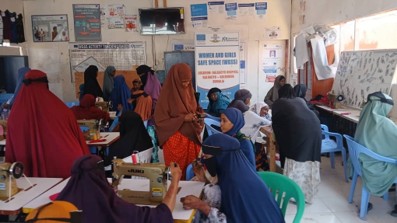
On her first day she met around 18 other women. They swapped stories, and soon they felt like a group. Sacdiyo felt at home.
The safe space offers tailoring, tie-and-dye, henna and makeup decoration, along with counselling and support for women and girls who need it. Sacdiyo enrolled in tailoring and tie-and-dye. Beyond the new techniques, she valued meeting other women and trading experiences.
After that first week, she asked two neighbours to join her. They agreed to share the cost of a bajaj.
“We shared the costs of transportation as we rented one bajaj to take us as a group three days a week,” she says.
Sharing the fare lowered the cost for each woman and made it easier to attend every session.
After three months, Sacdiyo graduated with a certificate in tailoring and tie-and-dye. Tie-and-dye proved the most useful, because the fabrics can be made into baati, a traditional Somali garment commonly worn by women.
“The most important skill I learned was tie-and-dye. I learned how to design and dye fabrics,” she says. “The training gave me the confidence to create opportunities for myself and to help other women as well.”
Back in Galkayo North, she turned a room in her home into a small learning space and began teaching women and girls who could not travel to the centre.
“I was already thinking about how I could have my own training space where I could teach girls from the area,” she says.
She now trains about 12 girls. Each contributes US$8 a month, which covers fabric and dye and leaves Sacdiyo a small income. Since opening her classroom in the last quarter (July- September), she has earned approximately US$280 in total. Several of the girls have completed their courses, and some now make and sell tie-and-dye fabrics in their own communities.
“Right now, women love the tie-and-dye designs we create for baati, and it is helping me support my family,” she said.
Her next goal is to add tailoring to her classes, but she needs a sewing machine, which she cannot yet afford.
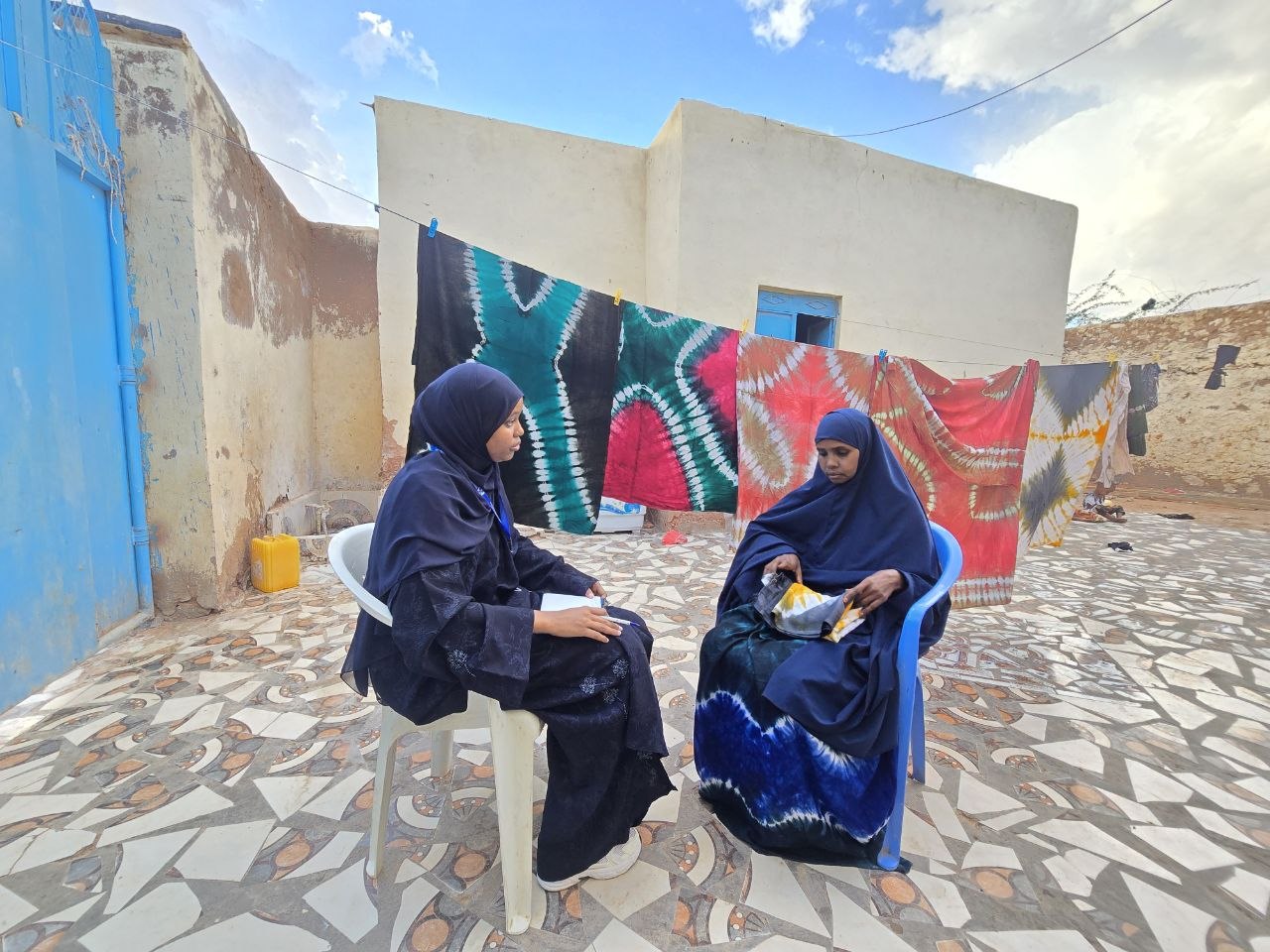
“Once I save enough to buy a sewing machine, I won’t just teach them how to dye the fabric. I’ll teach them how to stitch and finish the clothes from start to finish,” she says.
Until then, the room keeps filling with women and girls learning what she learned.
The Women and Girls Safe Space is funded by EU Humanitarian Aid through the CaafimaadPlus Consortium and run day to day by International Medical Corps.