By Eugene Ikua | Interview conducted June 2026
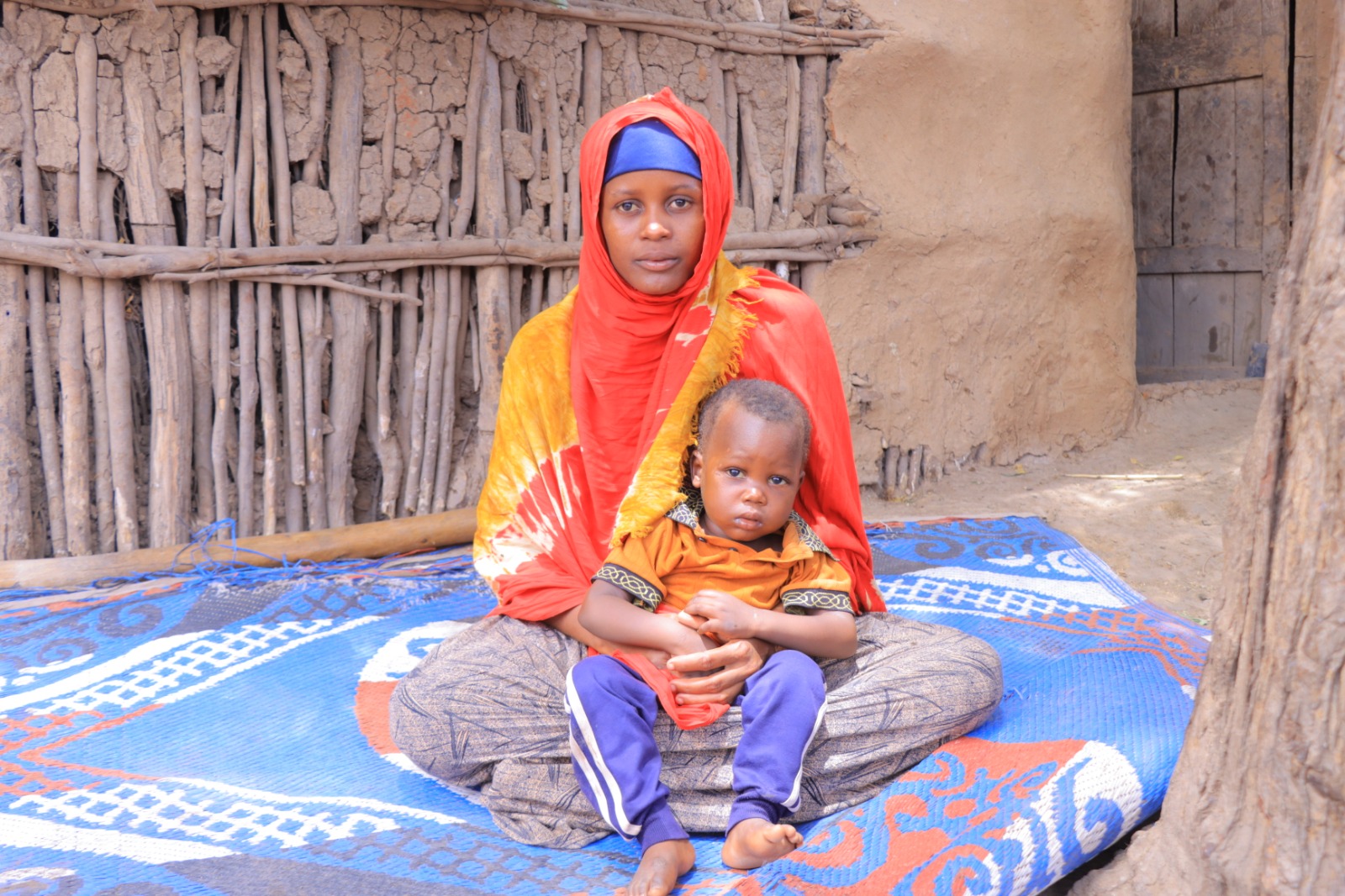
Before, says Yasmin Warsame Ali, her youngest son was skin and bones.
“Now, praise be to God, he has gained weight and is even growing taller,” she says. “His skin looks healthy and filled out.”
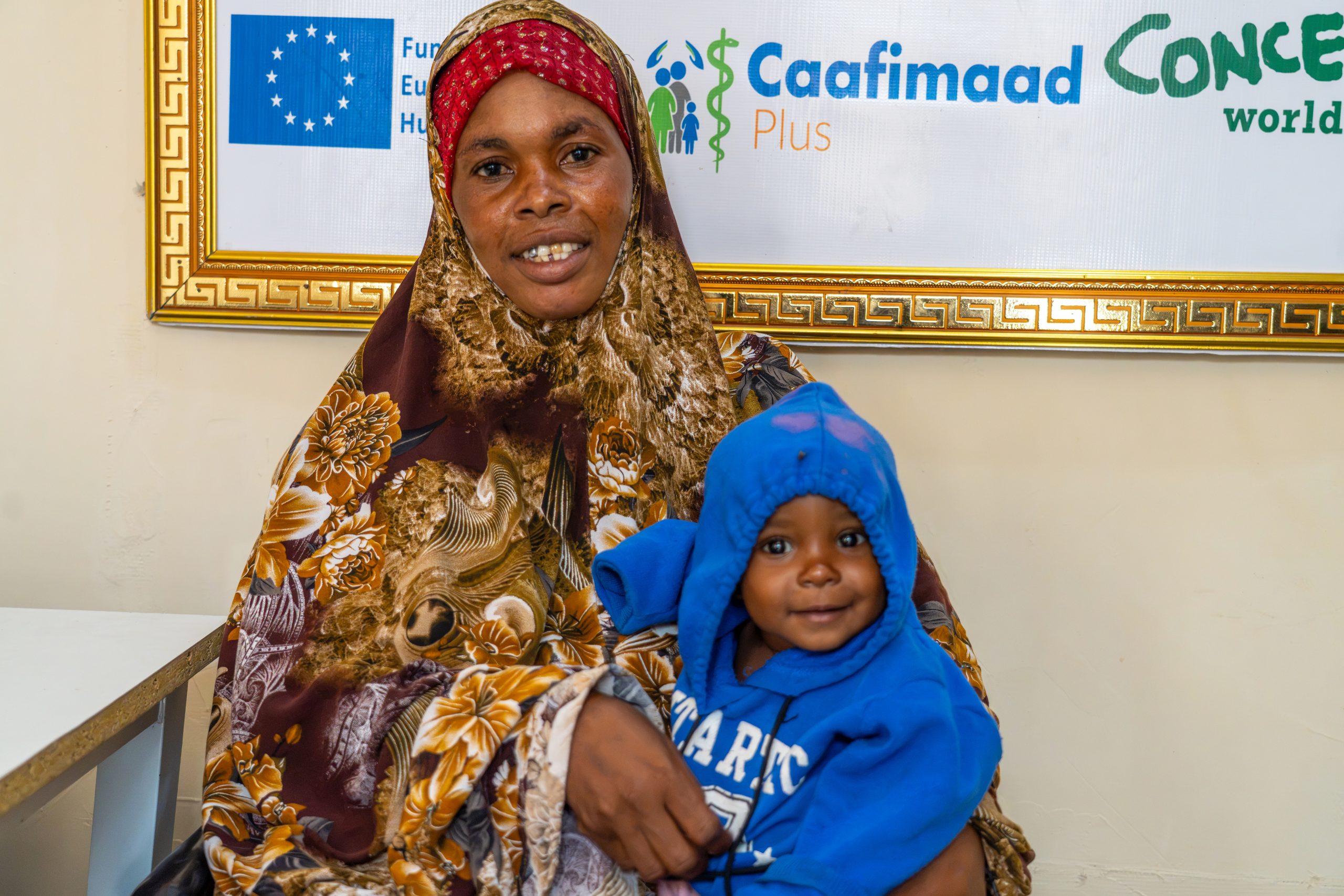
Imran, now 14 months old, smiles as he is held for the camera.
“Now he likes to put everything into his mouth,” she says. “That was something he could not do before.”
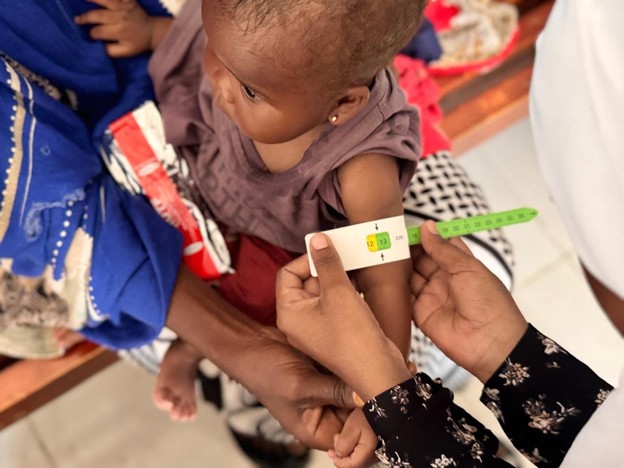
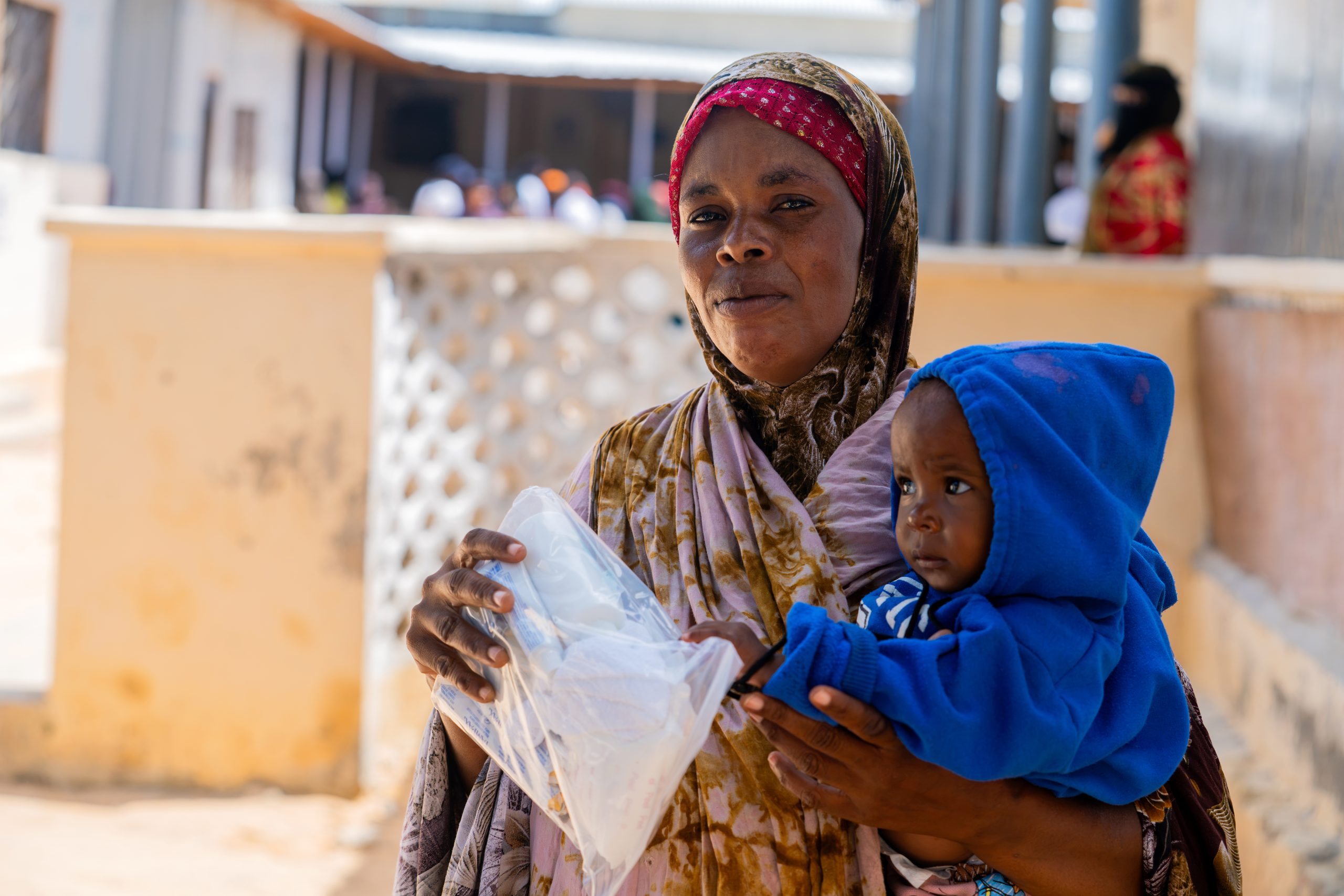
It is difficult to imagine him as the child Yasmin carried to Wadajir Health Centre in Mogadishu. He was 10 months old, had a fever and was very weak.
“When I brought the child, he was very weak and in critical condition and couldn’t do anything,” she says.
Wadajir was familiar to Yasmin, 38, who had given birth to four of her children there. She could not afford private healthcare, but knew where to seek help. The health centre was about 3.4 KM from her home in Kaawo Godey, so she walked there.
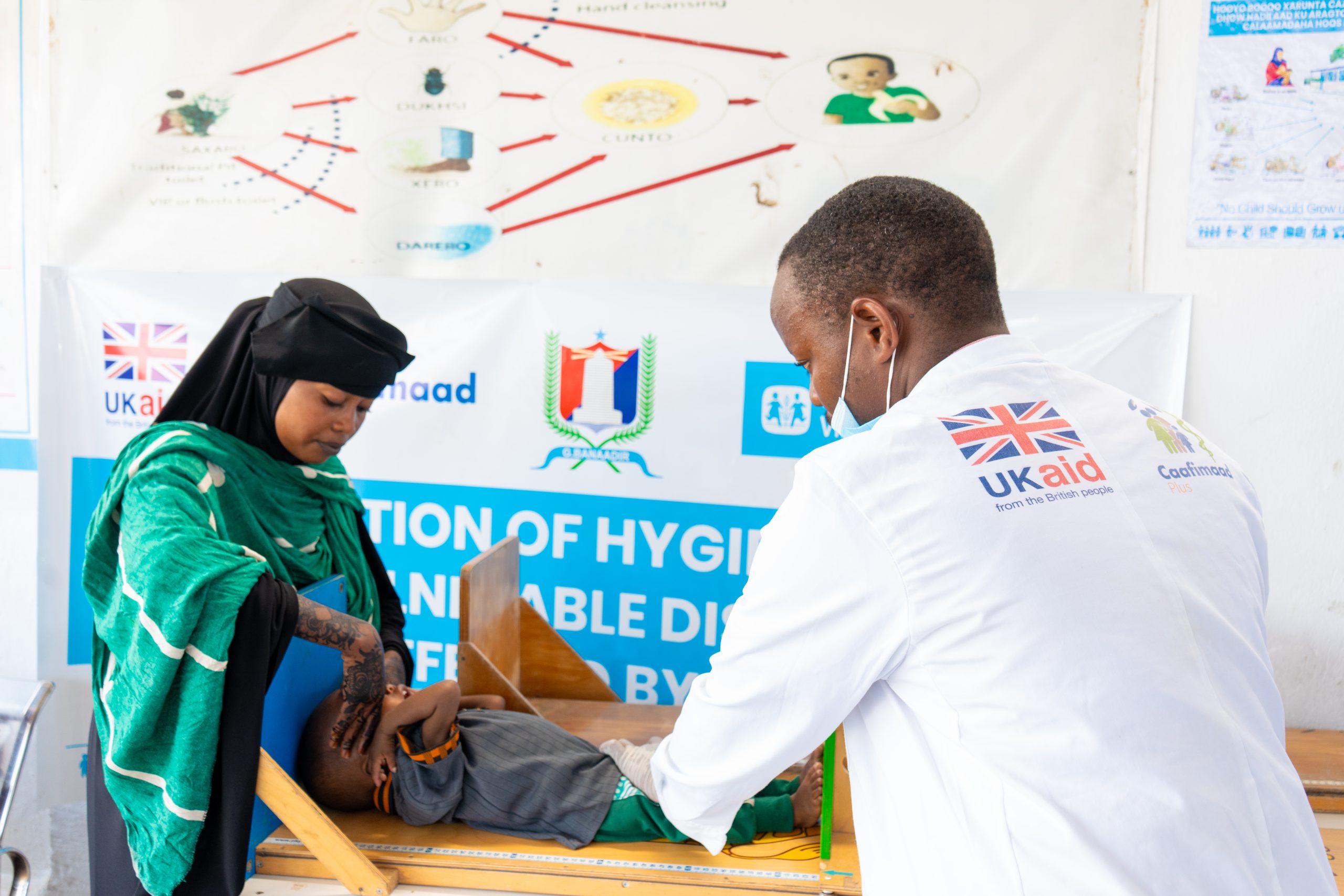
Health workers diagnosed Imran with severe acute malnutrition and enrolled him in outpatient treatment. He began receiving ready-to-use therapeutic food, alongside medical care and regular check-ups. His ration was later increased from 14 to 18 sachets.
Staff quote: name and job title, explaining the importance of early treatment and regular follow-up.
“Early detection and timely treatment of malnutrition are critical to preventing complications and promoting recovery. Regular follow-up enables us to monitor treatment progress, ensure appropriate care, and equip caregivers with the knowledge needed to sustain recovery and prevent relapse.” Mohamed, Facility Supervisor, Wadajir Health Centre
A household held together by two dollars
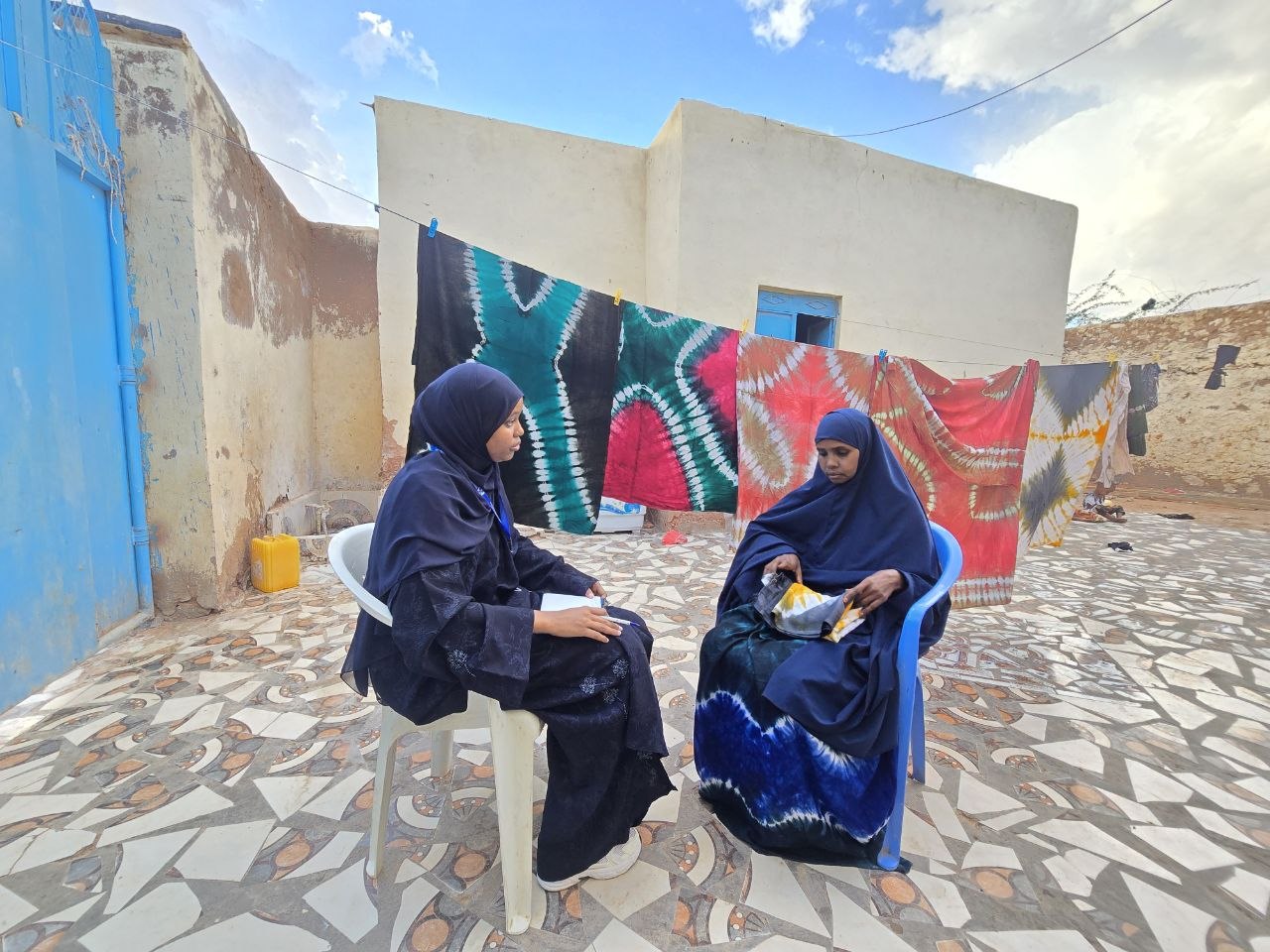
Yasmin is raising a family of 14 in Kaawo Godey. Her husband earns a living operating a handcart, but the family’s income depends on how much work he can find.
“On normal days when he works around, he brings us two dollars,” she says. “Those two dollars buy our main meal, vegetables for the sauce, and milk. That is what we get by on.”
When it rains, people stay indoors and her husband’s earnings fall. It also affects my older son 13 years old Husein, who repairs shoes, as fewer people go out and bring him workwho repairs shoes, as fewer people go out and bring him work. Yasmin’s own laundry work has declined as more households acquire washing machines.
The family moved to Mogadishu six years ago after drought near Baidoa destroyed their farm and the livestock her husband depended on. They first settled in Badbaado displacement camp, but later moved when landowners asked displaced families to leave.
For a family that had already lost its livelihood, moving again meant further uncertainty. Wadajir became a familiar place where Yasmin could seek care for her children, close to their new home.
At the health centre, she says, services are free. Before, she would take her children to a pharmacy, where even basic medicines came at a cost.
“They would charge me 10 cents or more,” she says. “When you bring a child here, they give you fever medication, test your blood and test for malaria. If the child needs specific medication, they provide it.”
Yasmin also shares the health advice she receives with others in her neighbourhood.
“Whatever information and advice they give us, we also share with the people and neighbours in our community.”
What is still missing
Treatment has helped Imran recover, but the family’s wider needs remain. They need a more reliable income and enough food to provide a varied diet. No cash assistance was available for referral when Imran was receiving treatment.
Yasmin also hopes her younger children will have access to the education that her older children missed while the family lived in a rural area.
“Now, my main dream is to put all my children through school and give them the opportunity to learn and succeed. I pray that God helps me achieve this and grants them success. That is what I hope for.”
For now, the family continues to rely on her husband’s handcart work and the health services available close to home.
“When I brought him in, he was very weak and crying a lot, and I had to carry him on my back every time,” Yasmin says. Today, Imran is more active, putting things in his mouth and continuing to grow.
Yasmin’s family is among many facing food and nutrition challenges in Somalia. The September 2026 Integrated Food Security Phase Classification (IPC) analysis projected that 433,000 children would suffer severe acute malnutrition between July 2026 and June 2027.
Wadajir Health Centre, operated by Concern Worldwide through the EU Humanitarian Aid-funded CaafimaadPlus Consortium Integrated Programme, treated 6,323 children for acute malnutrition between January and October 2026, including 1,555 cases of severe acute malnutrition (SAM).